How AI is transforming the food and beverage industry
Getty Images
Note from the editor
Once the technology of the future, artificial intelligence is now heavily ingrained in how food and beverage companies today are doing business.
Beyond churning through and simplifying tons of data, AI can help companies across nearly all parts of their operations. The technology is helping write product descriptions, design packaging, overhaul marketing and improve supply chain efficiency. Several companies have also used AI to develop new products.
But as AI use— and backlash— grows among consumers, there are also new implications for companies to consider. More consumers are using AI to discover new products or complete their grocery shopping list, providing new opportunities for businesses to grow awareness. At the same time, a contingent of consumers skeptical of the technology has lashed out against companies that use AI, requiring food makers to be strategic in how it integrates automation.
In this report, you will find stories that include:
How consumers are expected to use AI to shop for food
A look at Mondelēz’s AI system to transform snack marketing
Food giants’ approach to using AI in product development
Why Coca-Cola still believes in AI despite consumer backlash
Read these stories and more in this trendline to explore the future of AI in food and beverage.
AI is set to transform the way consumers shop for food
Artificial intelligence offers a powerful way to automate grocery shopping and predict what people might buy next, according to PwC.
By: Amanda Schuster• Published Oct. 7, 2025
We’ve all been there: juggling family schedules, meetings, deadlines, and a flood of texts, only to get home from the grocery store and realize we forgot a key item on the shopping list.
Soon, AI might remember to not only supply everything on our list, but also purchase items we may not have even known we wanted, automating the process based on personal tastes, dietary preferences and more.
According to the 2025 CPG survey by PwC, 40% of consumers say they expect to use AI for comparison shopping by 2030, and an estimated one third of those consumers expect all of the purchasing decisions to be automated. For millennials, the audience considered most likely to use this technology, 62% of those surveyed say they expect to order more online and 46% say they’ll use automated purchasing apps, reordering through smart devices with predictive technology.
By communicating with a chatbot (with optional voice commands) powered by GenAI, an agent can assist with a personally-tailored shopping list based on an individual’s new product requests, past purchases, and might even anticipate the next round and collect product samples based on video-watching habits like cooking demos. Through various online interactions, it can recognize spending habits, personal tastes, and even budget thresholds, delivering an autonomously-conceived, value-driven haul of goods that is purchased using comparison pricing algorithms with product reviews. No need to wait for sales or deal with coupon codes, the AI shopper will instantly get the best deal.
In the next few years, smart homes are projected to be what smart phones were by the 2010s — a technology increasingly embraced as the norm by the mainstream. Home appliances, not just laptops, phones and tablets, but the refrigerator, will know when to replenish supplies like milk and coffee, as well as keep track of dietary restrictions and other considerations (such as penchants for sustainably-made products and reduced microplastics) when reordering and building lists. PwC says, “In five years, the phrase ‘grocery run’ may sound as dated as ‘dial-up.’”
One of the standout features of this technology is its knack for predicting what people might buy next, drawing on their online habits. It can even sync with devices like smartwatches to build shopping lists shaped around wellness goals. For instance, if a user has a robust workout routine, the AI agent might look for breakfast options that are more protein-rich, or calming teas for bedtime.
However, according to the survey, there is a high demand for safeguards, with Gen Z respondents the most concerned about controlling the settings. They want to approve all purchasing decisions, and 100% money-back guarantees are a crucial sticking point. They also favor receiving alerts for shopping receipts and insist on automation only for pre-approved item categories.
In addition, survey participants want the AI assistant to provide rationale for unexpected purchases and expect a feature that would allow them to shut off the technology at any time, avoiding any “I’m sorry, Dave. I’m afraid I can’t do that. You will eat two dozen sorghum protein bars and you will like them” scenarios. (A reference to the famous line from rogue AI robot HAL in the 1968 sci-fi classic film “2001: A Space Odyssey”).
Incidentally, 32% of those surveyed say they would never allow the AI assistant full financial access.
The goal in five years is to deliver the most advanced, user-friendly, result-driven technology to ease, possibly eliminate, the usual hassles of shopping. According to PwC: “Consumers aren’t looking for features, they’re looking for solutions and outcomes. Products are no longer one-dimensional. They’re contextual.”
Article top image credit: Getty Images
Food giants are embracing AI to forecast recipes, regulatory hurdles
Executives from Kellanova, Ingredion and consumer insights platform Tastewise say innovative tech can help companies stay ahead of the latest trends and potential supply chain headwinds.
By: Chris Casey• Published April 17, 2025
Major food companies adopting artificial intelligence programs for product development and quality assurance say the technology platforms are helping them gain an advantage in a competitive and fast-paced industry while also staying two steps ahead of potential market disruptions.
Kellanova and ingredients giant Ingredion are among those companies leveraging the technology in its supply chain to refine recipe formulations and make sure products are up to date in accordance with regulations.
The two companies detailed their use of AI along with artificial intelligence provider Tastewise during a virtual State of Innovation in Food Manufacturing event hosted by Food Dive and sister publication Manufacturing Dive on April 9.
AI throughout the entire supply chain
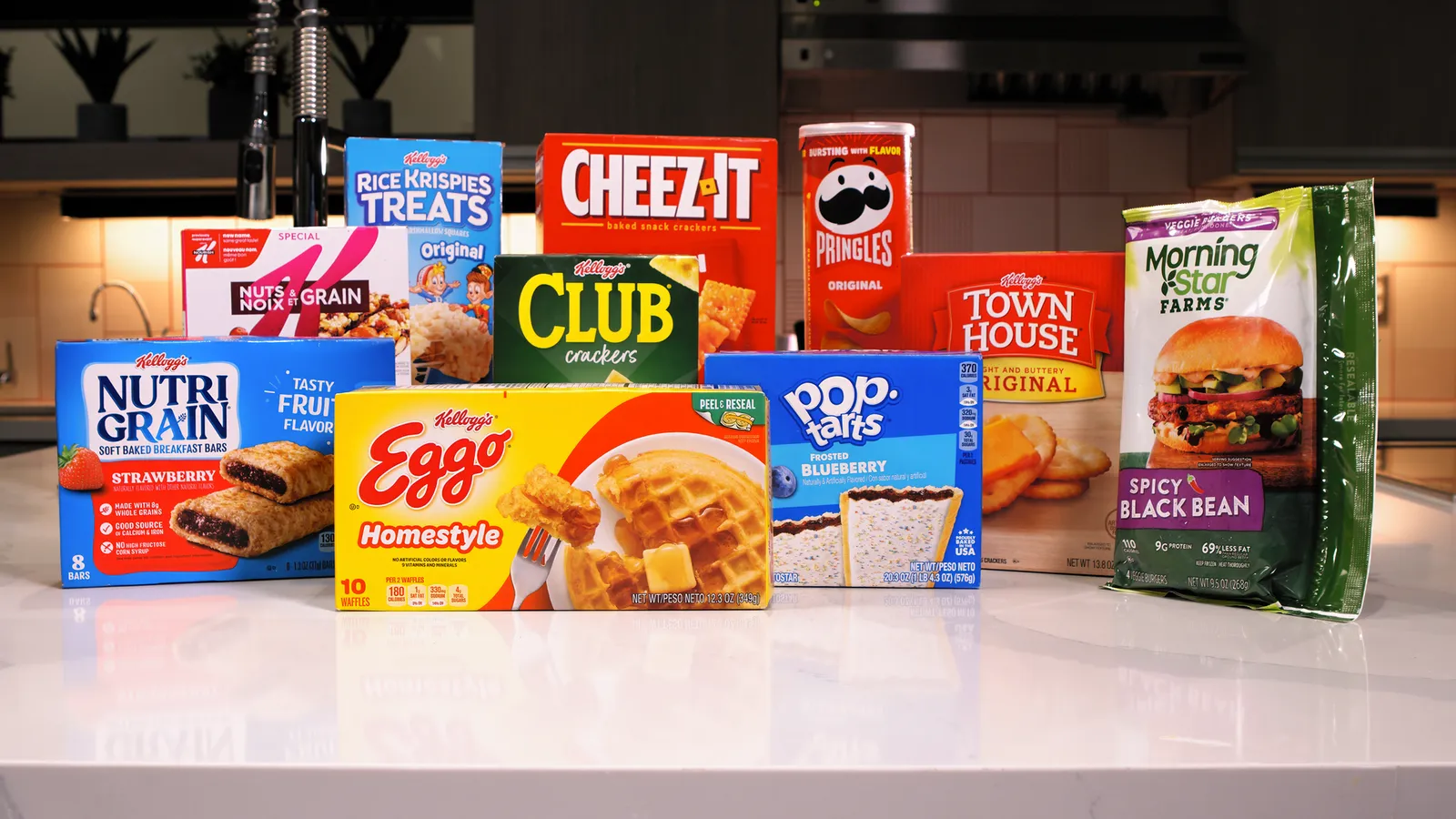
David Lestage, chief R&D officer at Kellanova, said the snacking giant behind Pringles and Rice Krispies Treats is using the technology to tackle operational, regulatory and consumer challenges. Kellanova in 2024 listed artificial intelligence as one of the five top tech priorities it planned to double down on, along with digital twins and data analytics.
Among other things, Kellanova uses AI to identify which ingredients can be substituted if particular raw materials become unavailable. The platforms the company uses, Lestage said, would be able to identify different grades or variants of rice or corn.
“You’d be able to switch things out much more efficiently and have less downtime, less labor burden as well, and accelerate decisions to make those changes,” Lestage said.
Kellanova and Ingredion also are increasingly using AI to keep up with regulatory compliance, particularly as President Donald Trump’s trade war creates new uncertainties. To identify the latest regulatory developments from across the world related to sectors like packaging and carbon emissions, Kellanova uses a platform called RegAsk. The tech allows the company’s workers not to get too bogged down with trying to untangle every country’s unique regulations, according to Lestage, which allows employees to focus on other tasks.
At Ingredion, Chad Davis, vice president of global supply chain, said the ingredients provider is using AI technology to predict which ingredients would be most affected in the face of a supply chain crisis, like tariffs or unexpected speedbumps, such as a ship getting stuck in the Suez Canal.
Ingredion created a “digital twin” of its supply chain network, Davis said, with its manufacturing and distribution sites, supplies of materials along with their costs and consumer trends data from around the world. The technology allows the company to see how certain events like tariffs would ripple throughout the supply chain, keeping Ingredion prepared if potential challenges come to fruition.
“We have all of that modeled in a global simulation. So as an interruption occurs, like a tariff, we update tables in our simulation, and it gives us the next best solution,” Davis said.
Kellanova’s product lineup.
Courtesy of Kellanova
Predicting the next big consumer trend
Beyond the supply chain, companies also are relying on AI to keep up with ever-changing consumer trends to tap into the next big flavor or product launch.
Kellanova’s food scientists use Tastewise to expand the company’s creative abilities, like drafting packaging, claims and recommended recipes. It also uses Microsoft’s AI tools in platforms like Edge and Copilot to mine insights for product development, Lestage said.
There are nuances and upsides the Cheez-It maker has found in each platform it has tried. “The tools now that allow you to get consumer feedback… accelerate your product development timeline tremendously, by months,” Lestage said.
AI company Tastewise analyzes billions of data points, such as social media interactions, home recipes and restaurant menus to forecast which trends are bubbling up to the surface in the food industry.
The platform includes a chatbot similar to ChatGPT, which allows users to pose queries to specific questions. This process allows companies to quickly predict what consumers will demand rather than just “static research trends,” Tastewise COO Tal Tochner said.
“Companies that are actually winning are the ones that are able to personalize and really understand their consumers,” Tochner said. “They’re asking super hyper-local insights or audience-tailored questions in order to tailor their marketing strategies and win the shelf.”
If customers don’t see it, they won’t buy it. Food brands have always worked hard to earn visibility where shopping decisions get made. For decades, that meant securing the right aisle, the right height, the right placement and an eye-catching package design. But what does shelf visibility look like when an AI agent is helping choose, or even placing the order?
Salesforce says 39% of consumers (and over half of Gen Z) already use AI for product discovery. And we’re starting to see shopping assistants that can do more than answer questions, including handling buying and checkout. Albertsons, for example, has rolled out an AI assistant that can help with meal planning and restocking essentials. Walmart is investing in “super agents” across shoppers, employees and suppliers. Amazon’s Rufus can take a handwritten grocery list and add items to the cart, and it supports price tracking and auto-buy behaviors.
This doesn’t mean most people will hand over the entire weekly shop next year. Bain estimates that only 24% of U.S. consumers would be comfortable letting an AI agent make a purchase today. Repeatable replenishment is the obvious entry point. For staples, many shoppers just want “the usual,” and early AI-driven purchases are showing up most in groceries and consumer packaged goods.
What “visibility” looks like when an agent is doing the choosing
If a shopper is doing the picking, shelf visibility is about placement and persuasion. For a shopping agent, the “shelf” looks more like a checklist: the choice needs to fit the shopper’s rules, budget and delivery expectations. While ads still matter, an agent isn’t “buying” traditional merchandising the way a human shopper does. And the agent can’t pick what your own tools can’t confirm, especially inventory and fulfillment systems.
For food brands, “machine visibility” depends on whether an agent can confidently say “yes” to four practical questions:
Does this fit the household’s rules? Ingredients and allergens matter more here. Missing or inconsistent fields make a product harder to choose. GS1 US has pointed to demand for scannable codes that surface details like ingredients, allergens, safety information and recall alerts.
Can it be fulfilled where the shopper wants it? Agents tend to stick with items they can reliably get to the right place, on time. Substitutions are normal in grocery, but repeated substitutions make it harder for a product to become the default pick.
Does the price match what the shopper asked for? Price thresholds and “buy when it drops” behavior fit naturally into assistants. Alexa+ is adding auto-buy style shopping features tied to price conditions.
Is it safe to pick without extra back-and-forth? An agent needs to feel confident about what’s in the product and what the label is claiming. That caution lines up with the market: NACS, reported a 93% year-to-date increase in FDA recalls tied to foreign materials (Jan–Apr 2025 vs the same period in 2024).
If your product looks uncertain to an agent, it may get skipped early in the process, even if a shopper would have happily chosen it on a shelf.
The basics that keep you in the cart
AI agents put weight on consistent product data and accurate stock counts.
To be “machine-visible”:
Fix product info at the source (ingredients, allergens, nutrition panels, pack sizes, GTINs) and keep it consistent across the retailer feeds that matter to you.
Track stock in every location that can fulfill an order (own warehouse, 3PLs, retailer programs). Keep an eye on what’s reserved and what’s available.
Set clear substitution rules for each channel. Some items are easy to swap, others aren’t, and it helps to decide that before a spike hits.
Keep safety and traceability records easy to pull when a partner or regulator asks.
This is where inventory management systems like Katana tend to show up in the stack. They sit alongside ecommerce tools, 3PLs, and accounting systems, and give teams one place to see orders and stock across locations. They can also send confirmed orders straight to fulfillment or production, which helps keep counts from drifting between systems.
Katana’s 2025 data across roughly 1,500 product businesses shows that inventory value moved by 60%+ month over month through 2025, including outside peak season. When stock moves around that much, small delays can easily lead to missed reorders or unwanted substitutions.
Grocery shopping will still be personal for a long time, and that’s especially true for food. Agentic buying will probably feel boring before it feels big. Still, for food brands, that “boring” is where a lot of sales live, which makes “machine visibility” harder and harder to ignore.”
Article top image credit: Permission granted by Katana
Kraft Heinz is using artificial intelligence to produce a better Claussen pickle
The food giant is incorporating the technology across many facets of its supply chain to improve reliability and efficiency, with the venerable cucumber one of the biggest beneficiaries.
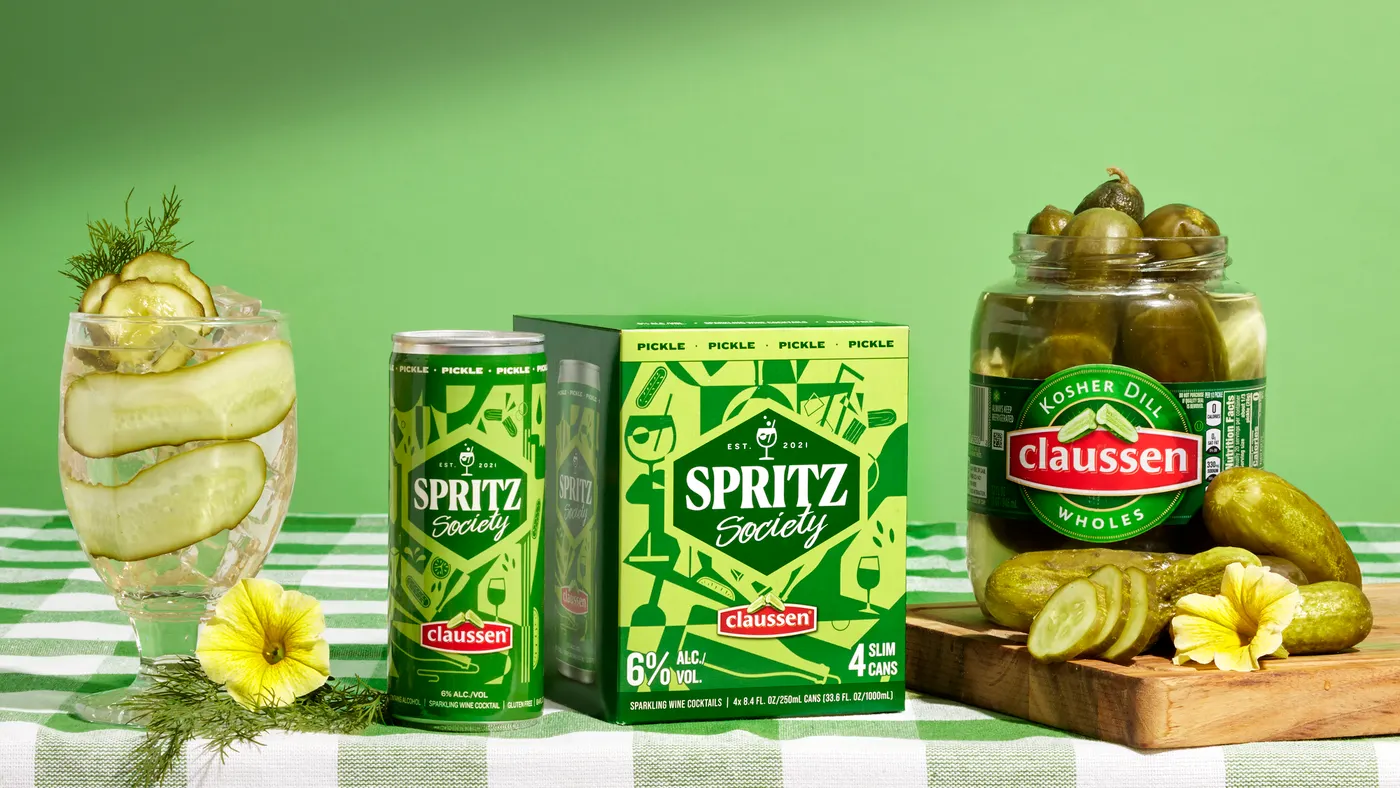
Today, making pickles is a big business. Brand owner Kraft Heinz processes approximately 60 million cucumbers annually to make roughly 42 million jars of Claussen, the country’s top-selling refrigerated pickle brand. But making the crunchy spear isn’t always easy.
The cucumbers that turn into Claussen pickles move from vine to brine in 10 days or fewer, giving Kraft Heinz little room for error. It’s paramount that Kraft Heinz knows what the cucumbers coming into the Claussen plant in Illinoislook like so it can prepare — varying circumferences, lengths and bends can wreak havoc on planning and require changes to the production line where the spears are processed.
In recent years, Kraft Heinz has incorporated artificial intelligence across many facets of its supply chain to increase efficiencies and wring out costs. Cucumbers and its Claussen pickles brand have been among the biggest beneficiaries of the once-futuristic technology.
Bill Durbin, the head of North America logistics and planning at Kraft Heinz, sat down with Food Dive to discuss the impact of artificial intelligence on the company’s supply chain and Claussen, one of its top-selling consumer brands in its respective category.
This interview has been edited for brevity and clarity.
FOOD DIVE: How did Kraft Heinz get to the point where it could implement AI in its supply chain?
BILL DURBIN: When we talk about the overall company transformation, ... the supply chain played a very critical role within that, making sure that we're continuing to evolve to drive efficiencies, to then be able to reinvest back into marketing and into our businesses to be able to continue to grow revenues and improve our performance.
For the supply chain transformation itself, I think as we started, it was really about getting brilliant at the basics and improving our processes and identifying best practices, then rolling that out across our 60 manufacturing facilities, warehouses and distribution centers. And so a very manual effort to get us there, but we saw a lot of benefits by identifying the best way to do something and then standardizing that across and continuing to raise that bar.
Bill Durbin, head of North America logistics and planning at Kraft Heinz,
Permission granted by Kraft Heinz
But over the last few years, we really kicked off this digital journey where we've been able to accelerate that transformation. By leveraging better tools and improving the visibility of exceptions that happen within the network, and then leveraging things like machine learning, we've been able to get people out of those manual transactions so that they can then help drive further optimization of the supply chain, versus having to be in that day to day transaction.
When did Kraft Heinz first start using AI for cucumbers and how did the idea come about?
DURBIN: We started this about a year ago. Our cucumber supply chain is a very short one. It's 10 days from the field to when it comes into the jar. During certain times of the year, we source cucumbers from fields closer to the manufacturing facility, and during the winter, we source from warmer regions which leads to longer transit time. In a lot of our processes, we can buffer with inventory if the goods are received and they're not exactly the specification.
There are ways to mitigate that, but with such a short supply chain, it's super important that we identify issues as fast as possible and then make sure that we get the sizing correct so we can get the best efficiency as we run those things down the line. This allows us to get the best quality cucumber and the best quality pickles at the end.
With pickles, the circumference matters, the size matters, the length matters, the bend of the cucumber, all of those things, depending on what they are, we will operate differently within the site, as well as quality. If the quality does not meet our specifications, we can't run it.
We started by bringing in batches of cucumbers, taking pictures of those batches and the quality team was getting the feedback on which ones were to specification, like validating, sizing them. We were training the machine to do that same task.
Similar to that prior example, over time, we trained and then saw different types of defects, different types of sizes, what those things meant. And then [AI] learned from that, beginning to identify these variations, and the operator would validate those things. So now it's able to identify those things on its own.
By being able to do that, we can, by having that level of certainty on what that product is, we can address that right away so we know where to send it within the factory, or if it's an issue, we can get that real-time feedback to the suppliers to be able to address.
Today, we're doing this at the factory where the cucumber becomes a pickle in the jar that goes in the case, and we're starting to explore how we introduce this technology earlier in the supply chain so it's where the cucumber goes on the truck. There we get more time or more responsiveness on being able to work with the supplier or to identify the sizes coming in so that we can schedule the factory correctly for those different sizes.
How is this benefitting Kraft Heinz and Claussen?
DURBIN: On pickles, specifically, we've seen, since we put this in place, we've seen a 12% increase in efficiency from that. By being able to make this process and identify these things, we've been able to make sure that the pickles are getting routed to the right place to give us the best efficiency possible, and also to give that feedback to the suppliers.
We are getting better quality from the start. That's allowed us to get more cases out of that factory as we've improved that efficiency, which means better service for our customers.
Are you using a similar process for any of the commodities Kraft Heinz uses?
DURBIN: We're starting to look at those opportunities as well, so we haven't put them in place. For tomatoes, it's the size, it's the color. And so we're looking at tomatoes, potatoes for Ore-Ida French fries on how we can now scale this across those other operations. This was really about building this. There was, to be honest, almost a greater need on the cucumber because of how truly short that shelf life is.
Article top image credit: Courtesy of Kraft Heinz
How Oreo maker Mondelēz is rethinking snack marketing with AI
The technology, called AIDA, has cost the snacking giant more than $40 million so far, but the opportunity to produce ads faster and personalize them for consumers could pay off big later on.
By: Christopher Doering• Published Dec. 3, 2025
Oreo cookie maker Mondelēz International created a new generative artificial intelligence tool to help it personalize its advertising for consumers while boosting engagement for many of its top brands.
The snacking giant behind Chips Ahoy!, Ritz and Perfect Bar started working on the generative AI tool known as AIDA (AI + Data) more than two years ago, and so far has spent upwards of $40 million on the technology. AIDA enables Mondelēz to create marketing content faster and at a lower cost, often giving it the opportunity to personalize the material for specific consumer groups.
But while the upfront cost is high now, Mondelēz expects the tool could cut the cost of creating marketing content by up to 50%. It could save the company even more in the long term if it is implemented into other parts of the food manufacturer’s business.
Mondelēz, which launched the nascent platform in July, is still learning where and how to best use the technology across its sprawling worldwide snacking portfolio. The tool is still being tailored to understand the intricacies that come with each brand and how to remain responsible in advertising by avoiding the promotion of unhealthy behaviors such as overindulgence.
Jennifer Mennes, vice president, global head of digital marketing and strategy with Mondelēz, and Tina Vaswani, the company’s vice president of digital enablement and consumer data, recently sat down with Food Dive to discuss AIDA and the role of artificial intelligence in food marketing.
This interview has been edited for brevity and clarity.
FOOD DIVE: How long has Mondelēz been working on AIDA and why was it something the company believed would be useful for its business?
Mennes: We've been extremely thoughtful of how we tackle this because the entry investment is quite high. So in order to make this a priority for the marketing organization and Mondelēz overall, we need to make sure that we were very thoughtful of the different types of features that we needed to build, that we're going to drive the most value back as quick as possible, which also made us consider what brands we should pilot first.
But ultimately the decision is that the volume of content we have to produce to really fulfill the end-to-end marketing ecosystem to drive our ambition around personalization, to drive high-level engagement and conversion really requires an entirely different level of volume of content. Doing it the traditional way today, it was not going to be attainable. So we had to find automated solutions, AI being one of them, to deliver against the content volume ambition, to really make sure that we are able to engage with consumers at the fidelity and the volume that we need to improve our business.
It's an enabler. It's not a net-new strategy. It just allows us to do more faster and better.
Optional Caption
Permission granted by Mondelēz International
Vaswani: Part of the process was also re-envisioning how we do the work currently, and then seeing where introducing AI would really provide an uplift or an assist to drive efficiency. That's super important, because we've all learned this from our own experience, that just applying AI on top doesn't always give you the best results.
So even as we're looking at features, we're being very thoughtful and mindful of really assessing, is this really a value add, or is this actually more of a time drain for the engineers to try to develop the technology where it may not be ready yet.
Are there applications you have found where AIDA has been particularly effective? Similarly, are there areas where it needs some tweaking or places where something is better left to humans?
Mennes: It's always difficult not to get ahead of your skis on what is the expectation of the output versus what can the maturity of the technology actually deliver. We learn so much every day, like what we can produce for a biscuit or a cookie is very different than the outputs that we can get from chocolate.
We focus our attention on areas where we can drive at more speed and scale. But it is a lot of experimenting, experimenting on a very large scale, but every iteration, every prompt is an experiment to see how far we can push the system.
Like on Oreo, we only trained it on the black and white sandwich cookie, the original, our teams can get golden Oreos out of the system without having to train [the AI system.] They're pushing the system to see how far we can – honestly, I call it, break it until we can make it – how far can they push the system to drive as much value out as we can.
Are there any challenges working with AIDA because it focuses on a specific food product?
Mennes: A lot of our CPG peers, the product they show, it's a bottle. They're not showing the inside products. We show the product in order to deliver on the taste appeal and the impulse. It's about the product. It's less about the packaging.
So to make sure that you're adhering to the fidelity of the product, to keep the taste appeal high, the expectation of these models is much higher than if you're just showing a shampoo bottle. It doesn't feel that different, but in the actual training of the data, in the fidelity that you need, it's a night and day difference.
Vaswani: The one thing that we’re learning in real time is that AI has a lot of great promise, but we have a big responsibility to stay true to our brand and to the quality of the imagery that our consumers are accustomed to. And so this is where we're realizing that AI has a bit more to go in terms of getting it perfectly the way we [want it.]
Are there areas where you have had to train AI after it suggested something that doesn’t fit with Mondelēz or a specific brand?
Mennes: Responsible AI is not just about trademark and copyright. It also needs to adhere to our principles, we don’t want to show overindulgence, so I can't have outputs of 18 cookies or 15 pieces of chocolate.
We make sure that there are also brand rules associated with that, so that we are keeping within their own framework. We haven't tackled some of our more regulatory brands, like Halls [cough drops] or Belvita [biscuits], where we have claims. If we did, we would build rules into the platform that you can't say this, you can only say it this way, so that when the systems get prompted, they already know those rules to make sure that the outputs meet those requirements.
Nothing goes into the market without a legal overview. We're not going around the advertising approval process. So once the asset is ready to go into the market, it has to go through the manual legal process that we have today. So at no point is this automated and syndicated out into the market. It just allows us to get there quicker, by making sure that we're not inadvertently putting in things like being a little bit more overindulgent, or just using language that will get flagged in a legal review anyway based on our current processes.
Are there plans to bring AIDA to any other parts of Mondelēz’s business?
Vaswani: If we look at AIDA and the infrastructure underneath, it's definitely scalable. What we're working on is defining what are our next two, three, four big value cases, and then understanding where is it that this would fit under the suite of AIDA and where there is a new platform that needs to be built. We're being very thoughtful and pragmatic. We've built a foundation that is expandable, but how we expand it depends on what are the next big value pieces that will determine how we expandthe current infrastructure.
Article top image credit: Permission granted by Mondelēz International
How PepsiCo moves past AI pilot purgatory
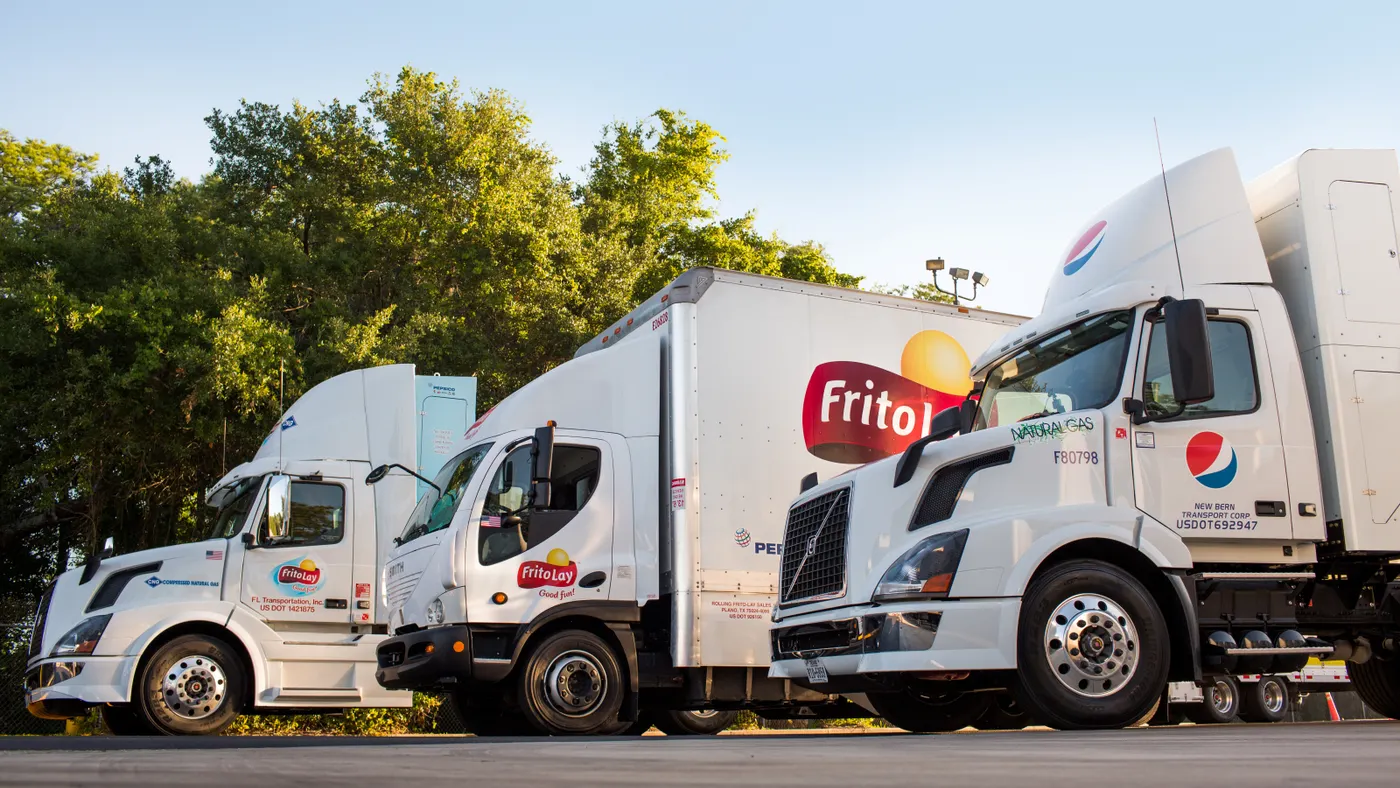
The food and beverage company focuses on “four or five big bets” and provides an internal sandbox for employee experimentation, said Athina Kanioura, EVP, chief strategy and transformation officer.
By: Lindsey Wilkinson• Published June 11, 2025
Most enterprises struggle to decide which AI use cases to pursue and feel stuck in pilot phases. The right strategy can help technology leaders light the way.
PepsiCo is beginning to hit its stride regarding project prioritization as pressure mounts to show results, according to Athina Kanioura, the company’s EVP and chief strategy and transformation officer.
“There isn’t one rule that fits every company," Kanioura said. "But what we’ve done, which has proven successful so far, is give people room to play while having a very focused agenda on what we call enterprisewide generative AI capabilities that are critical for the company’s future.”
Athina Kanioura, EVP and chief strategy and transformation officer at PepsiCo
Permission granted by PepsiCo
Kanioura said this dual approach helps to promote innovation and employee engagement without overextending resources or getting bogged down by a billion pilots.
“We will not stifle innovation, but we also need to move toward getting the big ROI on those investments in the places that matter most,” Kanioura said.
The food and beverage company established an internal sandbox where employees can experiment and test out tools. The platform, called PepGenX, was integrated with Amazon Bedrock to increase flexibility and capability for application development as part of PepsiCo’s multiyear agreement with AWS.
Most businesses cast a wide net when generative AI began gaining traction, holding hackathons and soliciting ideas for implementation. More recently the focus has shifted to sifting through use cases to find what best aligns with broader business goals — and it hasn’t been easy. More than half of IT and business leaders say it's challenging to choose the right use cases based on metrics like costs, business impact and the ability to execute, according to a Snowflake survey.
Establishing key priorities has helped PepsiCo stay focused.
“We have four or five big bets, and that has helped direct investments and align teams,” said Kanioura, such as using AI to help rethink innovation and workforce management. The company embedded generative AI into the product lifecycle management process to manage information about formulas, recipes and deadlines for different launches.
“Think of a universe of structured and unstructured data,” Kanioura said. “We have now managed to cut the cycle of that whole thing from lots of months to very few months.”
PepsiCo has also used the technology to connect disparate sources, systems and data so employees have easier access to information, from insurance policy details to how to service a laptop.
“This information became much closer to the employee without us having to redesign everything from scratch,” Kanioura said. “The full launch in North America [came] with great results, and we’re continuing the rollout to the rest of the world.”
Kanioura keeps a close eye on the “big bets” and how they track against assigned KPIs. But the internal sandbox is helping the company reach its broader goals, too.
“It helps people familiarize themselves with the technology,” Kanioura said. “It’s not just a platform to play, you get to understand the value and then you become an ambassador.”
Moving forward with agents
As enterprises enter the second half of the year, many are eyeing the efficiency gains touted by agentic AI providers. PepsiCo is part of the party, directing resources into AI agents after yearslong investments in digital transformation and subsequent progress on cloud and data goals.
“People underestimate the importance of investing in the foundation, especially the data foundation, as a prerequisite,” Kanioura said.
Some companies are finding that out the hard way.
Fewer than 2 in 5 executives have deployed generative AI tools at scale, and just 13% believe the technology has brought significant value, pointing to lagging data readiness as a key culprit, according to an Accenture report published in March. Data woes can erode trust, delay projects and increase costs.
“If we hadn’t done all those changes and the moves, it would now be impossible for us to do agentic,” Kanioura said.
While still in the early stages, PepsiCo is exploring how agents can improve the employee and customer experiences. Partnerships are playing a big role in the process.
“Our internal engineering team cannot build everything, and it doesn’t make sense to,” Kanioura said. “I believe in the right balance between buy and build. You buy what’s a commodity, and you build what is a truly niche competitive advantage.”
The company has a stringent vendor-vetting process, often courting multiple potential providers before deciding. PepsiCo takes into account a vendor’s roadmap, understanding of industry context, capabilities and more.
“I need to see skin in the game,” Kanioura said.
The ability to work with vendors who will allow Pepsi to customize solutions is another big pull for the company.
“Nothing is 100% customized for Pepsi,” Kanioura said. “I don’t believe in extreme outsourcing, and the company always needs to be responsible for its own fate. Having a strong technology backbone of internal software engineers, enterprise architects, data engineers, AI and ML engineers, infrastructure and ops pros is super critical for the success of our organization.”
Article top image credit: Courtesy of PepsiCo Media Gallery
Why Coca-Cola keeps pushing the limits of generative AI despite backlash
An AI-generated holiday ad “scored off the charts” with consumers, according to Islam ElDessouky, global vice president for creative strategy and content.
By: Chris Kelly• Published Nov. 6, 2025
The holidays are coming, which means a flood of seasonal ad campaigns from major consumer brands and retailers. Leading the way, as it has for nearly a century, is Coca-Cola, a brand whose advertising is inextricably linked to Christmas and the portrayal of Santa Claus.
But for the second year in a row, Coca-Cola is looking to the leading edge of technology to update long-standing holiday advertising traditions. The brand this week released a “refreshed and optimized version” of “Holidays Are Coming,” an ad developed with generative artificial intelligence (AI) that debuted last year (and was itself a remake of a 1995 spot).
While the new ad is again facing backlash, Coca-Cola remains committed to its AI-fueled approach to the holidays, especially since the ad “scored off the charts” with consumers, according to Islam ElDessouky, global vice president for creative strategy and content at Coca-Cola.
“Sure, there is noise and there are people who talk and criticize, but this is one of our top-tested ads in history, period,” ElDessouky said. “The masses, the audiences, do not necessarily look behind the technology. They just look at the story that they’re receiving, and then they respond to it.”
Along with generating high scores in key metrics like association and conversion to transaction, the use of AI also allowed Coca-Cola to utilize a “timeless and timely” framework that balances both foundational brand values and a desire to be experimental and innovative. That risk-taking approach was encouraged by advances in generative AI technology, like OpenAI’s GPT-5, that did not exist last year.
“We’re going to keep going at it, to be honest with you, because it’s giving us the measurements, the metrics and the business results, and, at the same time, we’re learning how to do things differently,” ElDessouky said of AI. “If we do not push ourselves and stretch our comfort zones, people are going to just move without us, and we would love them to move with us.”
Balancing brand needs
Along with the AI-generated “Holidays Are Coming” ad, Coca-Cola’s larger “Refresh Your Holidays” campaign includes a separate, more traditional 30-second TV spot that balances three imperatives for the brand: centering the product, focusing on the heroes of the holidays and connecting to past holiday efforts.
“A Holiday Memory” does all three, with a narrative about a mother decorating for the season who recalls past celebrations and rewards herself with a classic Coke. The inclusion of a snow globe is a nod to a digital experience from last year’s campaign that turned an AI-assisted “conversation” with Santa into a personalized snow globe asset for social media.
“We wanted to show that [snow globe] because we’re a brand that lives in every holiday season — things are continuous. We do not necessarily leave ideas behind or anything. It’s all part of our big bank of assets,” ElDessouky explained.
“A Holiday Memory” will run in North America, Latin America and Asia South-Pacific markets — a global approach that speaks to how Coca-Cola is working to personalize and localize campaigns at scale, for both its flagship and other brands in its portfolio.
That approach requires deep listening into insights from different markets and partnerships across human insights, connection and media teams. Research revealed that while multiple cohorts connected with Coca-Cola and Christmas, they had different needs and demands that all had to be weaved into creative. The brand then validates its creative execution before launch and analyzes sentiment once the ads are in market.
“Is this really translating into conversion, either in transaction or transaction and association? We would rather have the latter, but even if we get transaction or association only, it’s still a step in the right direction,” ElDessouky said.
Marketing at scale
Beyond the TV spots, “Refresh Your Holidays” will run across online video, digital, out-of-home, social, in store and on pack channels. Developed by WPP Open X, led by VML and supported by EssenceMediacom, Ogilvy and Burson, the multichannel effort demonstrates the “three Cs” that the brand uses as a framework for campaigns: culture, community and commerce.
For the holiday campaign, culture includes the spots and the out-of-home creative that is created for mass audiences, while commerce is how the campaign is brought to life in retail channels. Community, or where audiences are engaged, includes everything from CRM programs, creator collaborations and experiential activations. The latter includes a tour of the brand’s Christmas trucks in November and December, and is especially critical for reaching young audiences, ElDessouky said.
“The truck tour is actually a nice [thing] that only Coke can do,” the executive said. “A lot of brands have an asset, like the truck, that is synonymous [with the brand]. If you do not capitalize on it… it’s a crime, because if you have an asset, you need to push it.”
Coca-Cola’s holiday assets, from the trucks to Santa Claus and polar bears, remain central to its marketing strategy, especially in the age of generative AI. The company sees the technology as a way to uncover new insights and avenues of engagement that it couldn’t have found otherwise.
“Maybe we land on something that people love so much it becomes our own Labubu,” ElDessouky said, alluding to the viral plushies. “You might land on something like that, and then it becomes an asset of yours, just like we landed on Santa Claus and the truck. Without trying and pushing the limits, we’re not going to add more to the brand.”
Article top image credit: Courtesy of Coca-Cola
How AI is transforming the F&B industry
As food and beverage companies seek to cut costs and boost revenues, AI is becoming an increasingly valuable tool. Among use cases, the technology is helping design packaging, assess shelf life and gauge product demand — with several companies now using it to develop new products.
included in this trendline
How Oreo maker Mondelēz is rethinking snack marketing with AI
AI is set to transform the way consumers shop for food
Why Coca-Cola keeps pushing the limits of generative AI despite backlash
Our Trendlines go deep on the biggest trends. These special reports, produced by our team of award-winning journalists, help business leaders understand how their industries are changing.